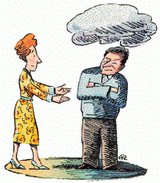
 Just as the body can break down under the strain of day-to-day living, so can the mind. Unfortunately, many people with emotional problems think that nothing can help or that they can simply "pull themselves up by their bootstraps". Others do not even realize that they're living under a cloud. While it's normal to occasionally feel discouraged, unhappy, or inadequate, it's not okay to feel sad, anxious or angry for long stretches of time. If you don't seem to be able to spring back from blue moods or if emotional difficulties begin to interfere with work, relationships or other aspects of your life, it's time to reach out for help. The latest treatments for emotional problems can make a world of difference and the sooner a problem is diagnosed, the sooner recovery can begin.
Common Mental Disorders
Just about everyone experiences bouts of anxiety or the blues, but what distinguishes mental disorders from simply feeling down in the dumps is their severity or persistence over time. The following is a description of the most common mental disorders:- Anxiety disorders are the most prevalent type of mental illness. Such disorders include generalized anxiety disorder, marked by feelings of tension or distress in the absence of any identified stress or threat; panic attacks, episodes of sudden, inexplicable terror; and phobias, inordinate fears of certain objects or situations.
- Major Depression, like anxiety, affects both mind and body. People who are depressed often feel a sense of helplessness, hopelessness or despair. They lose interest in their favorite activities, may experience changes in appetite, weight and sleep patterns, have difficulty concentrating, and be preoccupied with death or suicide.
- Dysthymia is chronic, mild depression. Although this condition is less intense than major depression, people with dysthymia are depressed most of the day, and more days than not, for a period of at least two years. They may feel a sense of hopelessness, have low self-esteem, eat and sleep more or less than usual, lack energy, and have problems concentrating or making decisions.
- Substance Abuse is characterized by the repeated and uncontrollable use of alcohol or a drug. According to the American Psychiatric Association, 10 million adults and 3 million children under age 18 are alcoholics.
How Do You Know If You Need Help?
If you are unsure about whether to seek help for a psychological or emotional problem, ask yourself, "Could I use some help right now?" The questions below may help you decide:- Is the problem interfering with your work, relationships or other aspects of your personal life?
- Have you been feeling less happy, less confident and less in control than usual for a period of several weeks or longer?
- Have close friends or family members commented on changes in your behavior and personality?
- Have your own efforts of dealing with a problem failed to change your behavior or improve the situation?
- Is coping with everyday problems more of a struggle than before?
Does Someone You Know Need Help?
 If you notice changes in the personality or behavior of a partner, parent or friend, it helps to pull back and look at this person as objectively as possible. What precisely seems to have changed? In what ways is this person acting differently? How long have you noticed these changes? Do they seem to be getting worse? In particular, ask whether this person:
- Has seemed sad, depressed or moody for several weeks
- Seems to lack energy and feels tired all the time
- Doesn't seem to get any pleasure from enjoyable activities
- Complains of problems sleeping
- Seems preoccupied with death or talks about suicide
- Has extreme mood swings
- Seems tense, nervous or restless
- Appears confused or has problems concentrating or thinking
- Experiences sudden feelings of panic or terror
- Has become extremely suspicious or fearful of others
- Is unusually irritable
- Has difficulty getting along with people at home or work
- Drinks more than usual
- Uses illegal drugs
- Has not bounced back from a crisis or loss that happened several months ago
- Seems unable to control or stop destructive behavior, like gambling
- Has lost interest in sex or cannot perform as usual
- Complains of troubling physical symptoms that doctors cannot find a reason for
- Mentions bizarre or grandiose ideas
- Has become threatening, aggressive, or violent
If the person you are worried about refuses to hear what you are saying, and you think he or she is self-destructive, suicidal or may cause harm to others--do not hesitate to contact a mental health professional immediately. If the situation is not so extreme but the person's behavior is clearly off base, the best option may be to go see a mental health professional yourself. Often skilled and experienced therapists can offer insight and advice into how to deal with your particular circumstances.
Does Treatment Work?
According to the National Mental Health Advisory Council and the American Psychiatric Association, treatments for severe mental illnesses are as effective or more effective than those available in other branches of medicine, including surgery. For example, treatments tailored to each individual's condition and needs can help 80 to 90 percent of those suffering from depression and manic-depression and 70 to 80 percent of those with panic disorder.Types of Therapy
- Psychotherapy. Talking to a psychological counselor can provide relief, lead to new insights, and help replace unhealthy behaviors with more effective ways of coping with problems. Most mental health professionals tailor their approach to the needs, problems, and personality of the person seeking help, and they may combine different techniques in the course of therapy. Many people are turning to short-term psychotherapy, which may last several weeks to several months. Most likely to benefit are those interested in solving an immediate problem. Here are various types of therapy available:
- Psychodynamic Psychotherapy. Psychodynamic therapists discuss their patients' early experiences and repressed feelings in order to provide insight into current problems and to bring about behavioral change. Therapy may be brief or it may continue for several years (i.e., Freudian psychoanalysis is often a lengthy process requiring four to five sessions a week over a period of months or years).
- Interpersonal Therapy (IPT). IPT does not delve into the psychological origins of symptoms, rather it concentrates on relationships as the key to understanding and overcoming emotional difficulties. The overall goal of IPT is to relieve symptoms of depression, improve self-esteem, and help patients get what they want or need from relationships in a positive way. The bond that the client develops with the therapist is a crucial component of this therapy. People with major depression, chronic difficulties developing relationships, dysthymia or bulimia are most likely to benefit.
- Supportive Psychotherapy. The goal of supportive psychotherapy, which can be brief or long-term, is to help people who may temporarily feel unable to cope during times of great stress, such as after learning that they have a serious physical illness. It also helps those with severe psychiatric disorders, like schizophrenia. Although many people think of supportive psychotherapy as simply giving comfort and advice, the process is far more complex and may include many therapeutic techniques, including education, reassurance, reinforcement, setting limits, social skills training and medication.
- Cognitive Therapy. According to proponents of this approach, how you feel is the result of how you think. Cognitive therapists help patients identify distorted or negative ways of thinking and replace them with more positive perceptions. This therapy was developed to treat people with depression, but therapists are seeing fewer of these patients thanks to antidepressants such as Prozac. In recent years, cognitive therapy has been adapted for more complicated problems, including borderline personality disorder or even schizophrenia. In such cases, the goal of therapy may be to teach patients how to control their impulses, or reduce the stress of hallucinations and delusions, or help them think logically.
- Behavioral Therapy. This approach is based on the premise that depressed individuals behave in ways that bring about negative consequences. Behavioral counselors help people change what they do in order to change how they feel. People may be encouraged to become more active or add pleasurable activities to their lives and to learn to assert themselves, relax, or modify their reactions to unsettling daily experiences. Behavior therapies work best for disorders characterized by specific, abnormal patterns of acting, such as alcohol and drug abuse, anxiety disorders and phobias, and for changing destructive habits or inappropriate behavior patterns.
- Psychiatric Drugs. Mental health care has been revolutionized thanks to the recent development of a new generation of effective medications, called selective serotonin receptor inhibitors, including fluoxetine (Prozac), sertraline (Zoloft) and paroxetine (Paxil). These drugs, which alter brain chemistry and relieve psychiatric symptoms, can be used in conjunction with psychotherapy or as the primary treatment. They can alleviate tremendous suffering and lower the costs of mental illness by reducing the need for hospitalization and by restoring a person's ability to live up to his or her potential. Psychiatric drugs can improve an individual's alertness, attention, coordination, energy, mood, judgment, sleep patterns and relationships.
The prescribing physician must take a thorough history of a patient, including the presence of any emotional disorders in family members, and assess his or her overall health to rule out any illnesses that might be causing psychiatric symptoms. Doctors must also weigh the benefits and risks of medications. While many psychiatric drugs are not habit-forming, others can be if they're not taken with appropriate caution. And as with any drug, side effects can range from mildly irritating (dry mouth, for example) to more bothersome (dizziness or constipation) to life-threatening (seizures or arrhythmias). Mild side effects tend to diminish or disappear after a few weeks.
If a particular psychiatric drug does not help, there are many alternatives. Psychiatrists with an expertise in drug therapy can usually find a medication that works even if it means switching drugs several times. In some cases, psychiatrists prescribe more than one medication to be taken at the same time. The use of combined medications requires clinical expertise as well as close supervision to ensure maximum benefits and minimal complications. These are some of the questions patients should ask prior to beginning drug therapy:
- Why do you feel medication is necessary?
- What specific symptoms will it relieve?
- What are the possible side effects?
- How long will it take the medication to work?
- Do I have to avoid eating before or after taking it?
- How can I tell if the drug is working?
- Is there any danger from skipping a dose?
- What are the risks of overdosing?
- Should I avoid other medications, alcohol or certain foods while I take this medication?
- How long will I have to take this drug?
- Is there a danger that I'll become addicted?
- What if this medication doesn't work?
Natural Ways to Beat the Blues
Two natural supplements--Saint Johnswort (its Latin name is Hypericum perforatum) and SAMe--are helping some people improve their mood. Europeans have used the herb Saint Johnswort to ease melancholy for centuries. In Germany, for instance, it is the leading treatment for depression and is prescribed twice as often as Prozac. Here in America, the initial enthusiasm over Saint Johnswort has cooled somewhat on the heels of reports showing that it can have dangerous interactions with other medications. As promising as Saint Johnswort and SAMe seem, most experts agree that more research is needed. On the dietary front, there's some evidence that eating more fish may ease mood disorders.Based on Saint Johnswort's record abroad, the herb is safe, easy to take, and has fewer side effects than standard antidepressant drugs. In one study of 3,250 depressed patients, only 2.4 percent experienced side effects, including dry mouth, gastric problems, dizziness, or mild allergic reactions. Research also shows that 80 percent of patients with mild and moderate depression either felt better or became symptom-free after taking Saint Johnswort for several weeks.
Available over-the-counter in drug and health food stores, Saint Johnswort comes in both liquid and tablet forms. The recommended dosage to alleviate depression is 300 milligrams of Hypericum extract containing 0.3 percent of hypericin (an active ingredient) three times a day. The herb needs at least a few weeks to start working.
Though some psychiatrists now recommend Saint Johnswort to patients with mild to moderate depression, beware. Experts advise people not to self-diagnose or self-medicate themselves. For one thing, depression and fatigue can be symptoms of other serious diseases. For another thing, the FDA recently announced that Saint Johnswort can render a wide array of prescription drugs--including oral contraceptives, AIDS medication and cholesterol-lowering drugs--less effective. Also, the yellow wildflower may do nothing for patients with more serious depression, and it should never be mixed with other antidepressants. Such combinations may cause a harmful rise in blood pressure or other life-threatening conditions.
SAMe--short for S-adenosylmethionine--is another natural mood booster to recently reach our shores. This over-the-counter dietary supplement is not an herb but a molecule that is produced in all living cells. SAMe has not been approved by the FDA for use in the U.S., but it is prescribed for major depression in 14 other countries. Trials of the substance in Europe show it works just as well as traditional treatments for major depression, and the only unwanted side effect seems to be mild stomach upset. SAMe appears not only effective for depression but for arthritis and liver disease as well. Medical experts say that SAMe provides pain relief for arthritis sufferers and very preliminary evidence suggests it may repair cartilage. Studies also indicate the supplement can help normalize liver function in patients with cirrhosis and hepatitis.
Now consider what research shows about the impact of fish on mood. Population studies indicate that low levels of omega-3 fatty acids--the fat in fish oil--are linked to depression, schizophrenia, and hyperactivity. What's more, a 1999 study showed that patients with bipolar disorder who were given fish oil were less likely to suffer bouts of mania and depression than patients given olive oil. Some scientists believe that omega-3s may help people who are already taking antidepressants and they may keep mental illness at bay altogether. Though more research is needed to prove that omega-3s have a mood-enhancing effect, it can't hurt to enjoy eating fish a few times a week. Best sources of omega-3 fatty acids are tuna, salmon, bluefish, mackerel, sardines and herring.
Simple Ways to Ease Your Mind
Self-help strategies play an important role in maintaining mental health. Among the most useful are:- Exercise. Studies show that aerobic workouts, such as walking or jogging, greatly improve the mood of mildly depressed or anxious people. Even non-aerobic exercise, such as weight-lifting, can boost spirits, improve sleep and appetite, reduce irritability and anger and produce feelings of mastery and accomplishment.
- Tuning into Problems. Analyzing recent events to identify possible sources of stress, either alone or with a close friend or loved one, can help a person regain a better perspective. If life has been particularly tumultuous, a lazy weekend away may help.
- Self-talk. All of us silently "talk" to ourselves, commenting on how we look and act. People whose inner voice is constantly critical should try to make note of unrealistically negative or critical remarks and focus more on the things they like about themselves.
- Keep a Journal. Writing about problems and concerns in a psychological journal can ease anxiety and help individuals work through painful feelings. To get started, reflect upon each day or week, and identify the most meaningful parts of it. If you experience an intense emotion--positive or negative--write down the circumstances and the effects of the experience. Analyze any encounter that makes you feel bad.
- Self-help Groups. Many people with physical or mental disorders find that talking with people with similar problems is extremely useful. Hospitals and community mental health centers often sponsor informal support groups. Such groups, especially those associated with a specific problem such as depression or alcoholism, also help prevent recurrences and relapses.
Who Can Help?
Anyone can hang out a shingle that says "psychotherapist," but this is not an official designation. In general, it's best to turn to licensed counselors (see below) who have demonstrated a basic level of competence and have passed state or national qualifying examinations.Before selecting a mental health professional, check his or her background with the national associations or their local chapters. The National Mental Health Association advises avoiding any person or organization that: Will not answer questions satisfactorily, promises financial rewards if you participate in a program, pressures you through a third party, offers or implies a guarantee of success, or tries to involve you in a long-term financial commitment.
The most common types of mental health professionals:
- Psychiatrists are licensed medical doctors (M.D.s), and they can prescribe medications. These physicians complete medical school, a year-long internship that includes training in internal medicine and neurology, and a three-year residency program that provides training in various forms of psychotherapy (including couples, family and group therapy) and psychopharmacology (the study of drugs that affect the mind). Board-certified psychiatrists have passed oral and written examinations following their residency.
- Psychologists may have a Ph.D. in psychology or a Psy.D. (doctorate in clinical psychology). They are trained in a variety of psychotherapeutic techniques rather than in one particular school or theory. Some have additional training in working with children and/or families. However, they do not study medicine and cannot prescribe medication. Psychologists must be licensed in most states in order to practice independently.
- Certified social workers or licensed clinical social workers (LCSWs) usually complete a two-year graduate program (some have doctoral degrees), plus specialized training in assessment and treatment of emotional disorders. Most states certify or license social work as an independent profession, requiring two years of supervised post-graduate clinical work and a qualifying examination.
- Marriage and family therapists are licensed in some but not all states. They usually have a graduate degree, often in psychology, and at least two years of supervised clinical training in relationship problems. Psychiatrists, psychologists and clinical social workers may devote much of their practices to helping couples and families. In the course of therapy, a person may see several professionals. For example, a social worker may refer a client to a psychiatrist to determine whether medications are needed. A psychiatrist may suggest that a person undergoing individual treatment for a mental disorder also participate in couples therapy with a marital counselor.
How To Get A Referral
In order to get the names of several therapists, ask your doctor or friends or relatives who are in treatment for recommendations. You can also go to the employee assistance program where you work. If you belong to a health maintenance organization or another health care plan, you should have a list of participating therapists.Cost can be a barrier to getting mental health care. Check your own health insurance plan to find out if a therapist's fee is paid entirely or only in part or if coverage is limited to a preset number of sessions or days of treatment. If you do not have mental health coverage, local and state agencies and advocacy groups may be able to direct you to publicly supported services or suggest ways of handling the costs of treatment.
Choosing A Therapist
Once you have the name of a therapist, arrange a brief telephone interview. Explain who referred you, what is troubling you, and what treatment you have in mind--if any. You should not hesitate to talk about fees, insurance coverage, payment plans and other practical matters in this introductory call. If the therapist cannot help you, he or she may be able to suggest an alternative treatment or refer you to a colleague. This initial phone conversation sets the stage for building a rapport in therapy. Ideally, you should feel that the therapist has listened to you and can help you work out your problem. If these criteria are met, the next step is to set up an appointment for a consultation. Remember to ask if there is a fee for this visit.After you've met with one or more therapists and discussed treatment options, use your instincts as well as your intelligence to make a final decision. Remember, a therapist who is not understanding and caring probably is not the right choice regardless of that person's qualifications or reputation. Here are some considerations and questions to keep in mind:
- Do you feel the therapist takes you seriously, treats you with respect, and shares or accepts your values?
- Is your therapist willing to explore all treatment options to find what works best for you?
- If the therapist is not a physician and medication is necessary, how will your care be coordinated? Who will your primary therapist be?
- If you decide to involve a partner or family member, will your therapist help educate that person about your problem and explain how to help you manage it?
- If you want a second opinion about treatment will the therapist be supportive and work with you to evaluate other recommendations?
Major Depression
The incidence of major depression has soared over the last two decades. According to data from the National Institute of Mental Health (NIMH), some 9.4 million Americans develop major depression at some point in life. Unfortunately, fewer than one of every three depressed people ever seeks treatment. One reason is that many people still do not think of depression as a real condition that should be treated. This perception couldn't be further from the truth. Depression can stop a person from functioning, cause a slow-down of body processes, and even lead to death.The characteristic symptoms of major depression include:
- Feeling depressed, sad, empty, discouraged, for several weeks
- Frequent crying
- Loss of interest in sex or any other once-enjoyable activities
- Gaining or losing weight
- Sleeping too little or too much
- Feeling slowed down or restless
- Lack of energy
- Feeling helpless, hopeless, worthless, inadequate
- Difficulty thinking clearly, making decisions or concentrating
- Persistent thoughts of suicide
- Withdrawal from others
- Physical symptoms (headaches, digestive problems, and pains)
In the spring of 2000, a study of 519 patients found that a combination of antidepressants and psychotherapy worked much better than either treatment alone for patients with chronic depression. After 12 weeks of treatment, 55 percent of patients given only an antidepressant improved and 52 percent treated only with psychotherapy improved. In comparison, 85 percent of patients who received both psychotherapy and medication experienced relief from their symptoms.
In people with moderate or severe major depression who cannot take antidepressant medications because of medical problems or who do not improve with psychotherapy or drugs, electroconvulsive therapy (ECT)--the administration of a controlled electrical current to the scalp--is the safest and most effective treatment.
About 75 to 80 percent of depressed patients improve dramatically within three to four months of starting psychotherapy and/or antidepressant medication. Signs of improvement should be evident within about eight weeks. If you or someone you know does not experience any relief within that amount of time, talk to the physician or therapist or seek a second opinion. A change in the type of therapy or in the medication or dosage may make a significant difference.
"Maintenance" therapy with medication and/or psychotherapy can lower the risk of recurrence of depression. Some people may continue on medication indefinitely. Others gradually reduce their dosage over time.
Other forms of depression include:
- Manic depression (bipolar disorder) causes mood swings that may take people from "manic" states of feeling euphoric and energetic to depressive states of utter despair. In episodes of full mania, a person may become so impulsive and out of touch with reality that their careers, relationships, health and survival are endangered.
Medication is the keystone of treatment, although psychotherapy plays a critical role in helping people understand their illness and rebuild their lives. Lithium carbonate, a natural mineral, helps in both treatment and the prevention of recurrences. Other medications, primarily anticonvulsant drugs, are also playing an increasingly important role.
- Seasonal affective disorder (SAD) is a form of depression brought on by the shorter periods of light in winter. Annual episodes usually begin in the fall and start to taper off in March or April, with the coming of spring. According to NIMH estimates, at least 10 million Americans have SAD. Symptoms include feeling down for no reason, lack of energy, irritability, fatigue, and excessive sleep. Sufferers may also find that they crave carbohydrate-rich foods and gain weight during the cold months.
SAD often improves with phototherapy, a treatment that involves sitting in front of a specially designed light box for 30 to 60 minutes every day (preferably in the morning). It's thought that light treatment works by shifting the body's internal clock. Be careful though, too much exposure can cause overstimulation. Treatments for people with severe winter depression may include one or more of the following: psychotherapy, antidepressant drugs, stress management, and phototherapy.
It may be hard to imagine, but some people have the flip side of SAD--that is, they feel melancholy in the spring and summer. Light might play a role in triggering summertime seasonal affective disorder, but heat and humidity are thought to be the main culprits. The antidote:ice-cold showers and air-conditioning. If that's unappealing or impractical, antidepressant medication can help.
The Toll of Mental Illness
Mental disorders can alter forever a life course, destroy dreams, shatter relationships and cost billions of dollars. Consider some statistics:- Each year 29,000 Americans, most with treatable forms of mental illness, take their own lives.
- The depressive disorders alone--treated and untreated--cost the US nearly $44 billion a year, according to researchers from the Massachusetts Institute of Technology and the Analysis Group of Boston. Direct costs, including medication and psychotherapy, come to about $12 billion. Indirect costs, such as decreased productivity and absences from work, total $23.8 billion annually.
- The mentally ill make up the largest single disabled group and account for one fourth of all recipients of federal disability funds.
- Schizophrenia is more prevalent than Alzheimer's disease, insulin-dependent diabetes, multiple sclerosis or muscular dystrophy. People with this illness occupy one-fourth of the nation's hospital beds and account for forty percent of treatment days at long-term care facilities.